
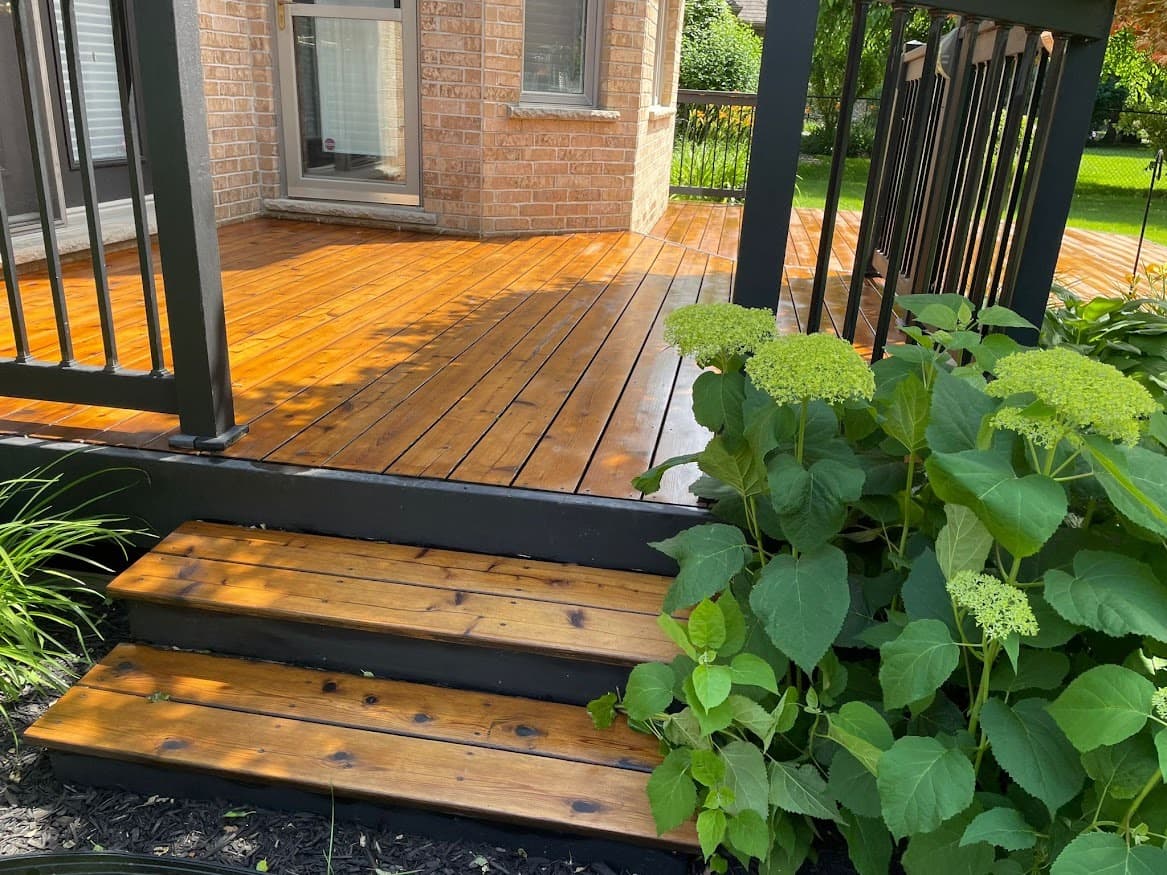
Proper deck preparation is the most important factor in a long-lasting stain job, and the cleaning method you choose has a bigger impact on the result than most homeowners realize. The two main approaches — pressure washing and manual cleaning — each have real advantages and the right choice depends on your deck's condition, wood type, and the type of finish you're applying.
Power Washing: The Fastest and Most Effective Option
Pressure washing is the standard prep method used by professional deck staining contractors, and for good reason. At the right pressure and distance, a pressure washer strips away years of embedded dirt, mould spores, mildew, and old surface oxidation far more effectively than any manual method. It also opens up the wood grain slightly, which improves stain penetration.
The key variables in power washing are:
Pressure: For most softwoods (cedar, pine), 500–1000 PSI is the sweet spot. Higher pressures risk surface fuzzing — raising the grain and creating a rough texture that holds stain unevenly. Hardwoods can handle slightly higher pressures. Consumer rental units often can't deliver consistent pressure at lower settings, which is why professional equipment produces better results.
Nozzle angle and distance: The nozzle should be angled slightly with the wood grain, not directly perpendicular to it, and kept at a consistent distance (typically 6–12 inches). Inconsistent distance creates an uneven clean that shows up as colour variation after staining.
Deck cleaning solution: For decks with significant mould or grey oxidation, adding a professional-grade deck cleaner or brightener to the wash dramatically improves results. These solutions break down the contamination chemically before the water rinse carries it away.
Manual Deck Cleaning: When and Why
Manual cleaning — scrubbing with a brush and deck cleaning solution — is the right approach when pressure washing isn't practical or when the wood is in a condition where high-pressure water would cause more harm than good. Very old or weathered softwood with deeply checked boards, for example, can absorb too much water under pressure and swell or split. In these cases, a careful manual clean followed by a light sanding is more appropriate.
After Cleaning: The Critical Drying Window
Whichever method you use, the deck must dry completely before any stain is applied. Staining wet or damp wood traps moisture under the finish, which causes bubbling, poor adhesion, and premature failure. A good rule of thumb: wait at least 48–72 hours after washing in warm, dry weather; longer in cool or humid conditions. You can test readiness with a simple water bead test — if water soaks in immediately, the wood is ready. If it still beads, wait longer.
The Professional Approach
At Toronto Deck Stainers, we use commercial-grade pressure washing equipment on every project, calibrated to the specific wood type and condition. We include a deck cleaning solution where needed and confirm the wood is fully dry before any stain touches it. This prep work is included in every staining, sealing, and restoration project — because we know that the prep is what makes the finish last.